Rotten Film
My grandpa recently passed. This piece I wrote about my family’s experience with his dementia feels especially close to my heart today. I’m sharing this piece today, knowing I need the reminder, too.
My mom recently gifted me the camera her parents got when she was a girl. When they bought it, it was top of the line with automatic shutter settings. But for the past few decades, it had been tucked away in a drawer, replaced as the family documentarian by gadgets with Wi-Fi connections and 24 megapixels minimum.
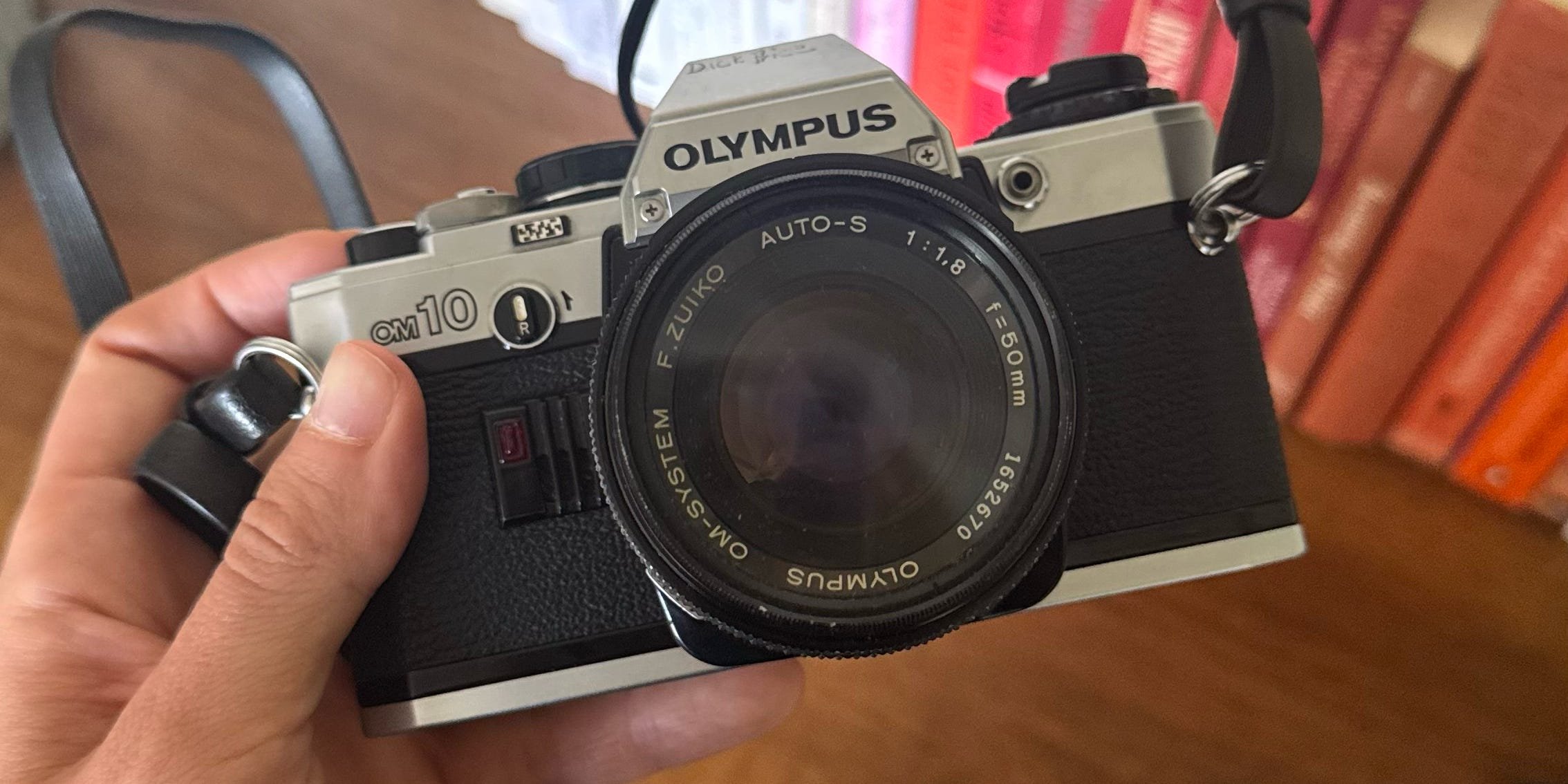
The camera is an Olympus OM-10, and has my grandpa’s name engraved at the top.
I grew up looking at photos from this camera, imagining what it was like to grow up in Peck, Kansas. When I first tried to use it, a half-used roll was still loaded in the camera. My heart fluttered at the thought of possibly unearthing some long-lost treasures. Would we find photos of my auburn-haired grandma, who passed a few years ago?
My hopes were soon squashed when I realized that the film in the camera bag was coarse and wiry; it had spoiled rotten. I’m not sure how long that film had been waiting around to be discovered, but the back-up battery also in the bag expired in 1989. So, with the context clues that I had, I forgave the decades-old film for acting its age.
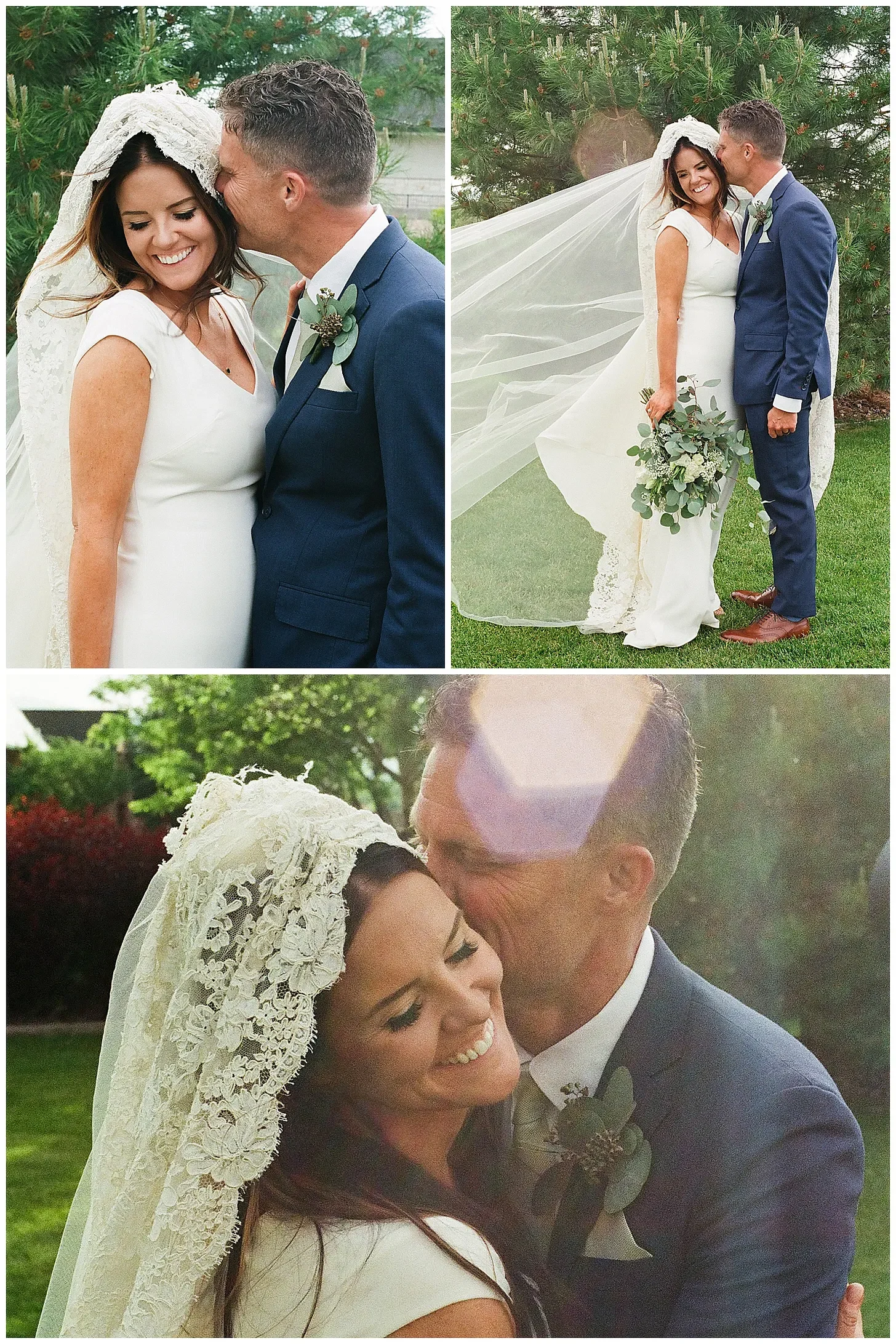
The first time I used the camera was at my aunt’s wedding. My overly sentimental heart gets nostalgic about everything from favorite bedtime t-shirts to used napkins, so photographing her wedding with the camera from her childhood meant a lot to me.
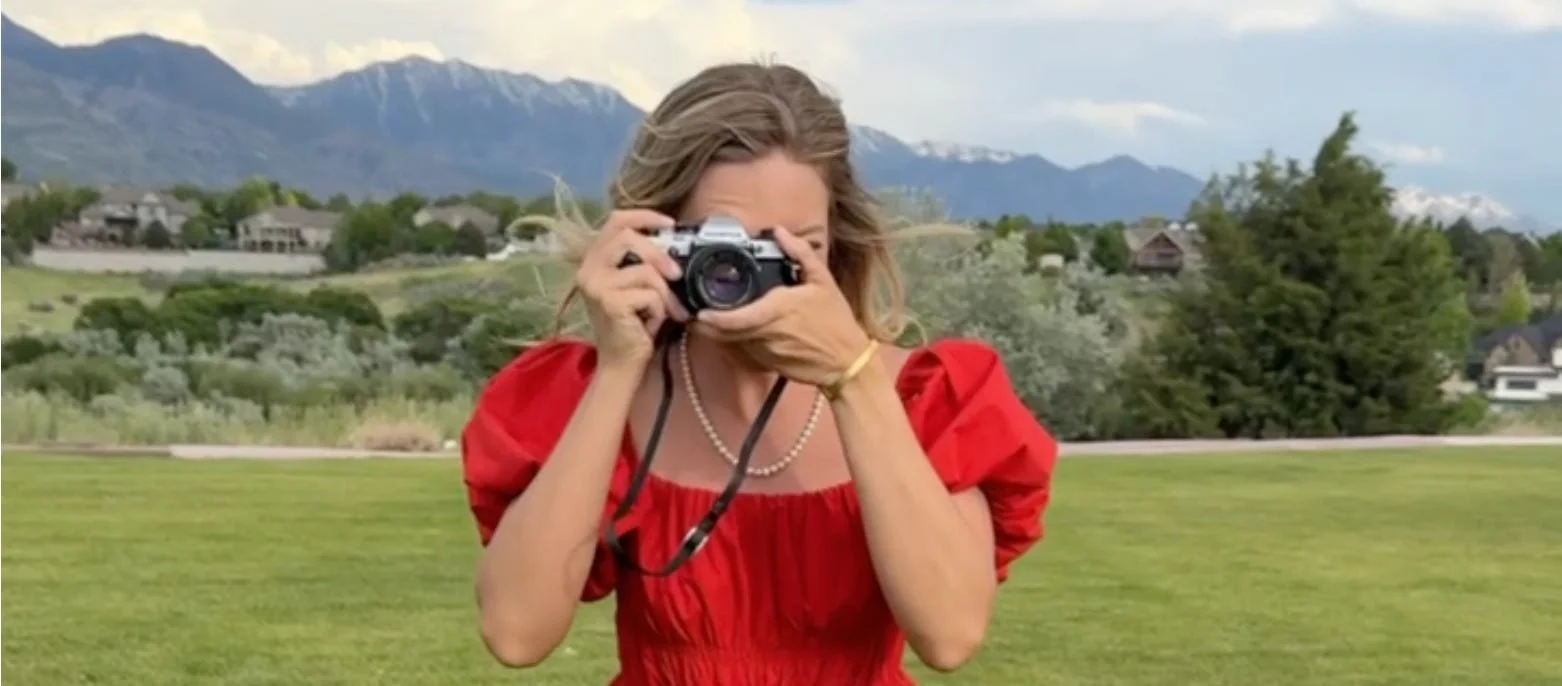
Me with my grandpa’s camera at my aunt’s wedding
I had used a film camera before, and thank goodness for that. The first time I loaded a film camera by myself, I loaded it wrong and accidentally exposed the same square of film 36 times. A forgivable mistake for a beginner… if I didn’t do the same thing on the second roll, too.
It’s okay, though. The story has a happy ending. Or rather, the Costa Rica trip I was trying to document had a painful ending, so I wound up being grateful not to have those photos. I told myself that it was poetic symbolism for how only the things that are meant to stick around will stick around.
Back then, I found myself wishing that I could wipe my memory as easily as I wiped my film roll. I don’t feel that way anymore, but I still feel guilty admitting that while living with my grandpa, who is struggling with his memory. He’s staying with us for a month, and while it’s a blessing to have this time with him, it’s also painful to watch my mom lose parts of her dad while he is still here.
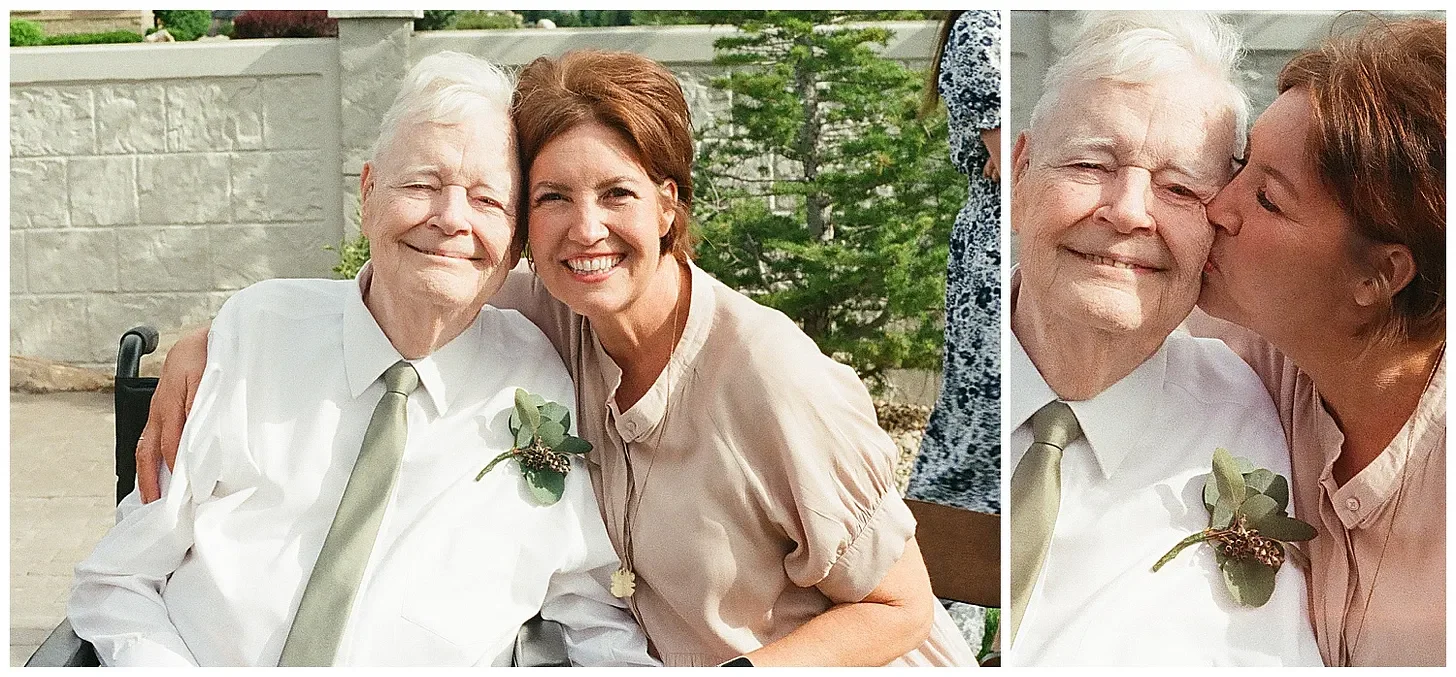
Film photos of my mom and her dad from the wedding day
Many of the self-help books littering my shelves explain a majority of human behavior by the subconscious need to distract ourselves from the inevitability of our mortality. We’re all attempting to fill a void through various means of distraction until, one day, we die. If you take this line of thought all the way into nihilistic territory, everything we humans do starts to feel like shooting on crispy film from the 80s. What’s the point?
Recently, around the dinner table, I talked about how excited I was to see fireflies again when I travel back to where I grew up. We don’t have many of them in the high altitude of Colorado, so whenever I see them again, it makes me teary with joy. So, I asked my grandpa if he also had fireflies where he grew up.
My grandpa didn’t remember what fireflies were. Maybe he called them lightning bugs, I rationalized to myself. But a moment later, he didn’t remember River Grove, the Illinois suburb where he grew up. My heart sank. I don’t like losing bits of him, either.
I’m ashamed to admit this, but I often don’t know how to talk to him. They’re all barriers I’ve made up in my mind, and I’m worried about what they say about me. When I look straight into the core of it, it’s the same fear. I’m scared of shooting on rotten film, and he’s a reminder that it can all slip away. No memory is safe.
Tonight at dinner, we were celebrating his wedding anniversary, so my mom asked him to tell her the story of how he met my grandma. He closed his eyes, and they twitched back and forth, like someone rummaging through a drawer in a hurry, hoping to remember where they left something. But he found nothing lurking behind his eyelids, so he asked if we could tell him the story instead.
He’s had an enduring love story worth emulating and seven children who adore him. Where does that all go when memories of fireflies and the names of your children start slipping away?
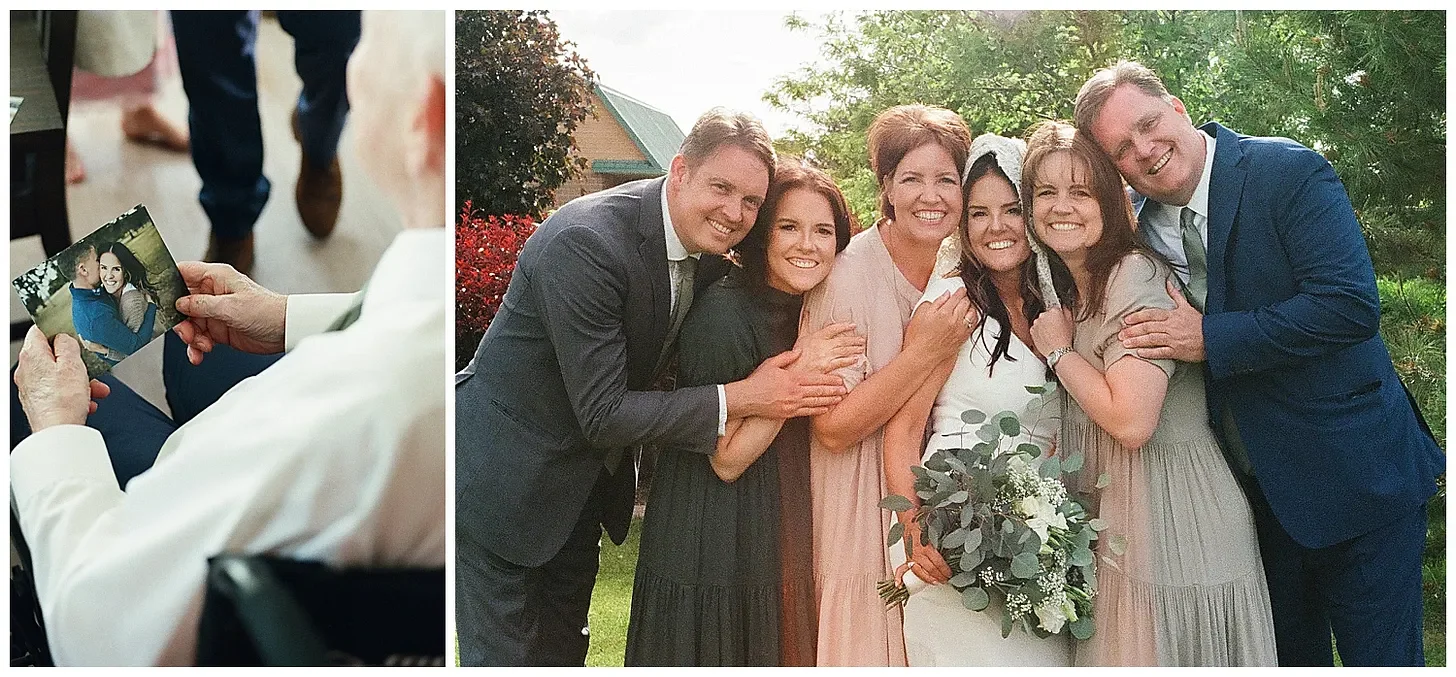
left: Grandpa looking at a photo of the bride and her husband.
right: some of my aunts and uncles, photographed with their childhood camera
I found myself wondering what it all meant—why we grasp so tightly to things when we know it’ll all inevitably disappear. If everything we do as humans relates to our obsession or avoidance of death, what does my hobby of photography say about me? It likely stems from that desire to keep things just as they are, right now, in this moment, like drawings on cave walls from long ago. Maybe even a scrawled “Bob wuz here” in a gas station stall is just another attempt at saying: I existed. I mattered.
But no matter how many pictures I take, I can never seem to preserve the past the way I want to. It’s always insufficient, the film never good enough, because what I’m really after is immortality: for the moment to last forever. And while we’re at it–I don’t want my grandpa to die or my mom to die or for me to die either, thank you very much.
But that’s not how it goes. So, how do we find meaning when we’re shooting on rotten film?
My grandpa needs help getting around now, so he couldn’t walk my aunt Kelly down the aisle on her wedding day. As the bride walked alongside her brother, I watched from behind as my grandpa clung to my mom for balance, his sobs making it hard to stand upright. Her eyes were glassy, too. I couldn’t see much from where I sat, but the love was thick in the air. We were all breathing it in.
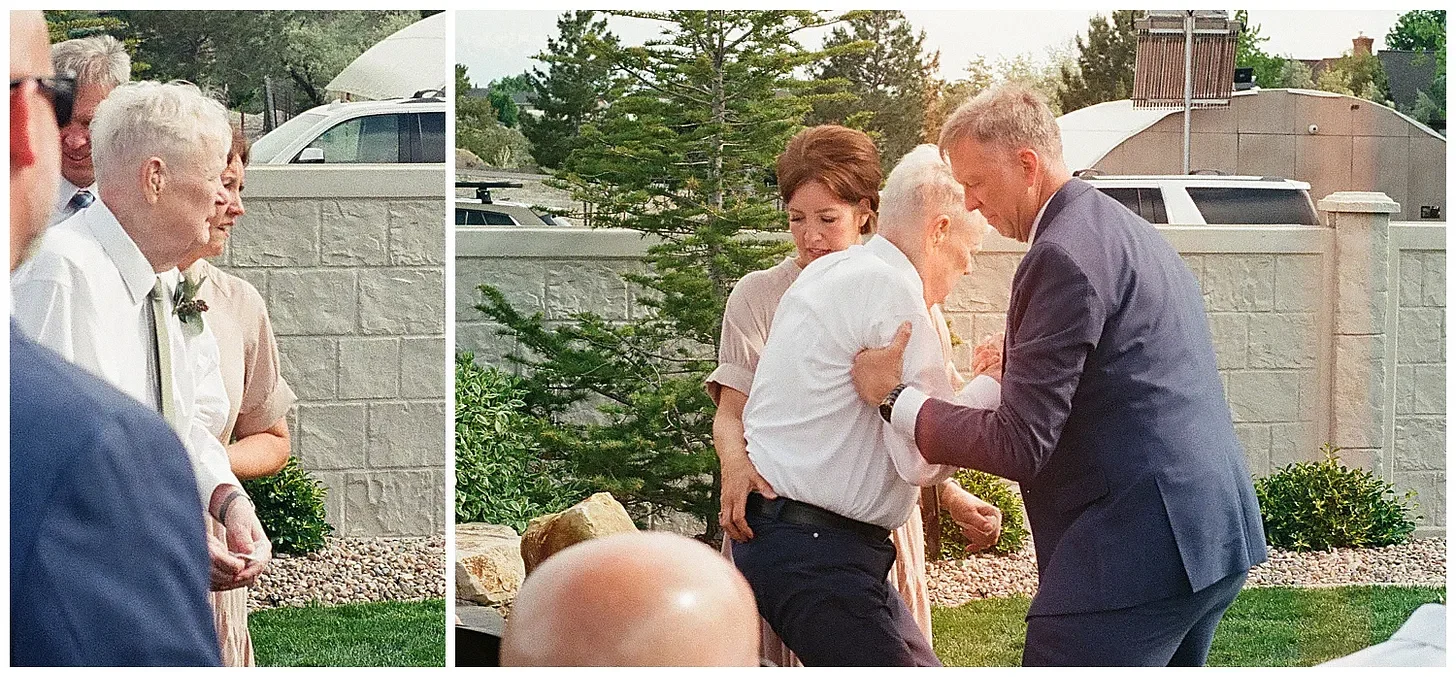
I was in the back row. My view of him was awful, and each film photo costs $1 to develop. My sentimental heart beat out my frugal mind – I took the picture anyway. I’m so glad I did, and it has nothing to do with the photo.
I think about the spoiled film I unwound from the camera that was passed down to me. We’ll never see those photos, but I’m still glad they were taken. It means someone I loved had a moment they found worth remembering. I think about the lost Costa Rica pictures and how, while I’m glad I don’t have them, I’m also grateful I was on that trip. I needed to be, to become who I am now. I think about how my grandpa doesn’t remember fireflies, but he cried on Kelly’s wedding day. I forgive him the same way that I forgave the spoiled film from the 80s. They’re both acting their age. The moment still matters, even if it’s forgotten, lost to time.
My family loves to recount our favorite stories from the Price family lore with my grandpa. It keeps him rooted in who he is, but sometimes it seems to turn into a pop quiz about who he used to be. As if we’re asking him, “Are you still this person in these photographs?”
Answer: he is, and he isn’t. Change is the only inevitable part of this human experience, and while it can tint life with pain, it also offers an incredible meaning. I give him permission to throw that film away if it’s gone bad. I have space, gratitude, and so much love for this version of him, too.
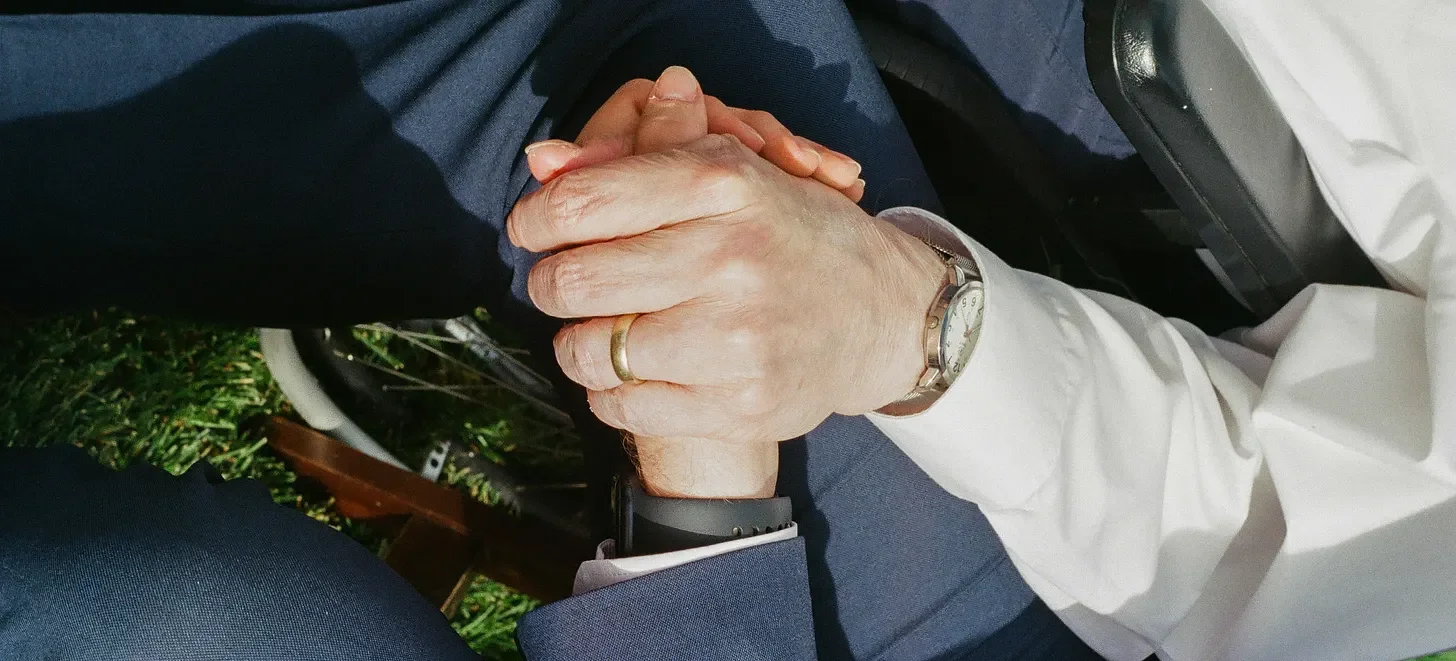
My brother Kerst holding my grandpa’s hand
He didn’t remember what fireflies are, so I got to teach him. I told him that they’re bugs that have butts that light up like flashlights. He looked confused, so I continued, explaining that when you go outside at night when there are lightning bugs, it appears as though the world is sparkling around you. I saw his face light up–not in recognition, but in delight.
My mom, listening nearby, started singing a song about fireflies from my childhood:
Twinkle, little lightning bug.
Twinkle, little lightning bug, for me.
Twinkle, little lightning bug, all through the night,
Your twinkles are so special to me.
Her voice caught on the last line. I didn’t remember the song, but I cried along with her anyway. I suppose there are many reasons why memories fade away. That doesn’t make them any less meaningful.
There’s no way to preserve what was, or what is, but we take the photo anyway. We take the photo, even if it’ll never make it into the history books — or the family scrapbook. We take the photo knowing that the film may never even get developed. It was never about the photo, but a practice of being present and thankful.
Keep shooting, even if the film is rotten.